👋 Hey, it’s Stephane. Welcome to my weekly newsletter where I share lessons, and stories from my journey to help you lead with confidence as an Engineering Manager.
When I got my first Engineering Manager role, I was over the moon! I’d been coding for years, led a few projects, and had plenty of informal chats with teammates about career progression. How hard could managing people be, right?
Turns out, very.
Looking back I didn’t know much about management really.
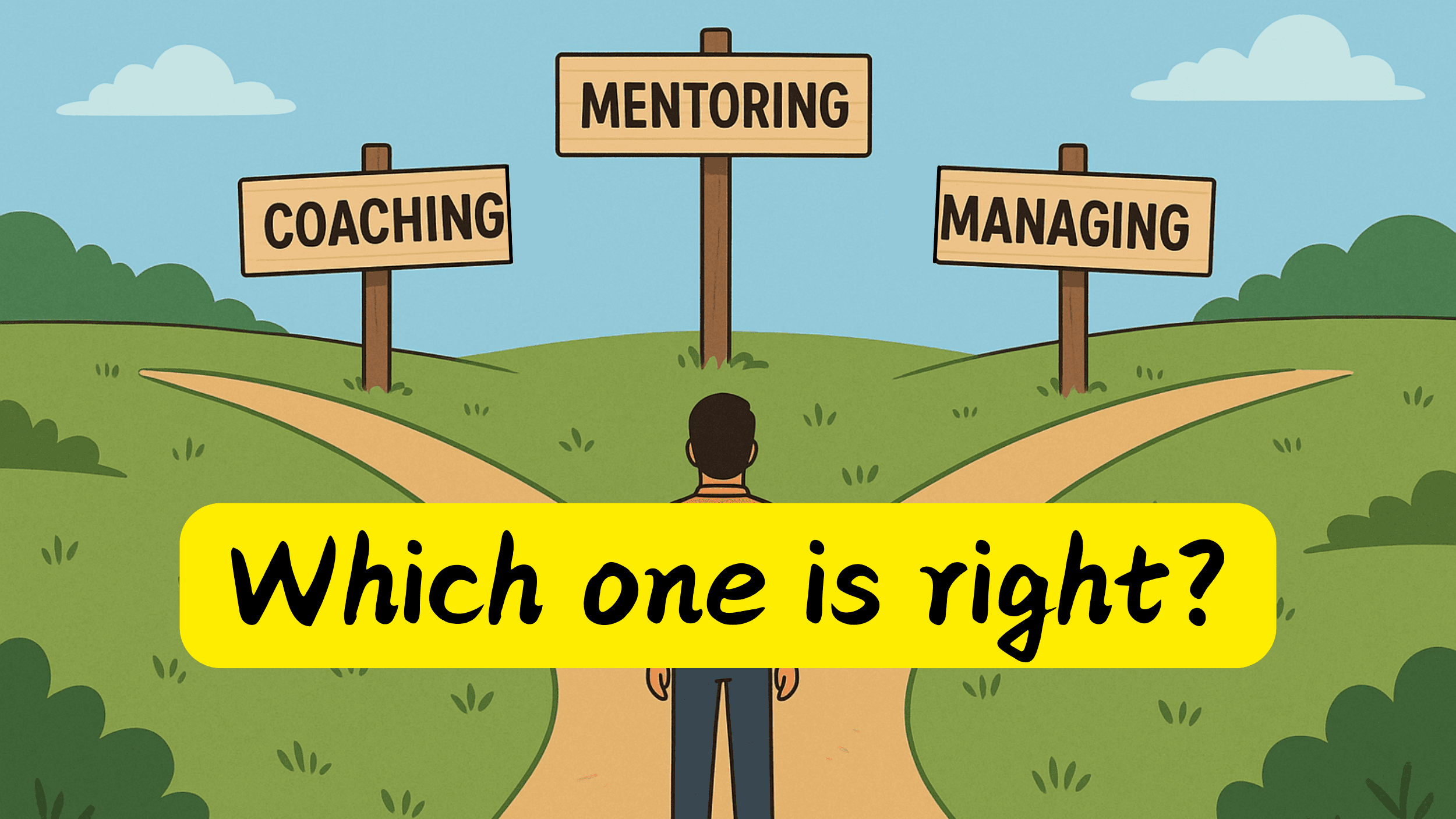
When do I need to coach? When to mentor? I didn’t even know the difference between the two…
Many EMs, even experienced ones, still confuse these terms.
So, let’s untangle them once and for all.

Get hired as an Engineering Manager (sponsored)
If you are searching for an Engineering Manager job in this horrendous job market and want to make your life easier, I’ve got something for you!
I have created material that simplifies everything:
CV & LinkedIn for Engineering Managers
How to apply (and actually get interviews)
How to prep for behavioural/leadership/people & values interviews
Many people have used the exact same resources in the past year and saw immediate success!
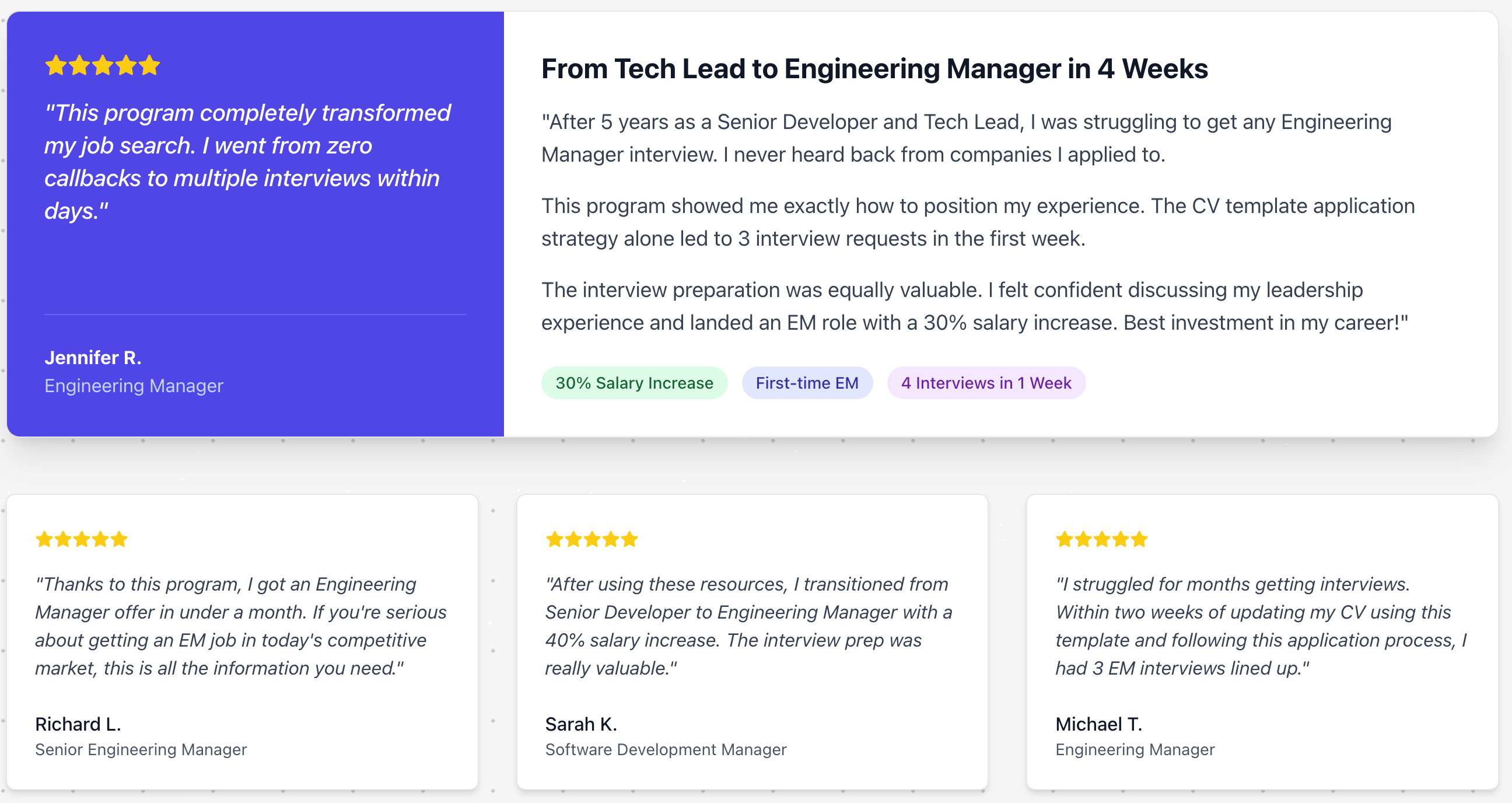
I created this system for myself first, and since I have found so much value from it, I needed to share it with you too!
If you have any questions on it, feel free to reach out at stephane@em-tools.io
Back to this week’s thought.
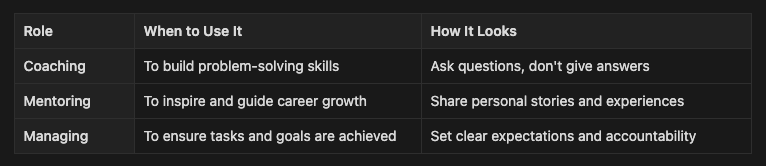
Coaching
Imagine your developer Sarah struggles with task prioritisation. As a coach, your role isn’t to swoop in with your "perfect" solution. Instead, you want to guide Sarah to uncover the answers herself by asking questions. For example:
What’s your goal here?
What's worked for you in the past?
What’s getting in your way right now?
Coaching is not providing solutions. It's nurturing problem-solving skills with the goal to empower your engineers to rely less on you and more on their own capabilities.
This applies to all contexts by the way. I am pretty sure that a great coach can help a person on any field find the answers that they need just by asking the right questions.
An easy way to practice coaching: in your next 1:1, pick one topic your engineer struggles with and only respond with open-ended questions. Resist the urge to provide immediate solutions.
Mentoring
Mentoring, on the other hand, is where your past experience must come into play. Your junior developer, Alex, might be navigating a tricky promotion path, and your own lessons and expertise become very useful.
Mentoring is stepping in as someone who's "been there, done that" offering your experiences to shape Alex's path:
When I was in your shoes, here’s what worked for me...
I faced a similar challenge, and here's how it played out...
Mentoring is deeply personal and anecdotal. It relies heavily on your experience to guide and inspire.
If you would like to practice mentoring share short, relevant personal stories.
Note: Both coaching and mentoring can be applied at a 1:1 level but also with the whole team. It’s on you to assess what individuals or your team needs more from you.